Light
How can a global leader in architectural lighting like Erco tap into new digital
channels to acquire new customer groups? In a master's semester project, our
team had the opportunity to work in close cooperation with Erco on this very
challenge. Our concept enables the acquisition of new customers and impressed
Erco so much that it is currently being developed confidentially.
For this reason, further details and the final results cannot be presented
at this point until release.
PROBLEM IDENTIFICATION
Meetings with employees, product developers & executives
FORECAST / RESEARCH
Trends, Competitive Comparison, Technical Feasibility, User research, User Interviews
PROBLEM SOLUTION FIT
USP, Interviews with experts, Interviews with focus groups, Feature Map, Road Map
REQUIREMENTS DEFINITION
User stories, Persona creation, Target Groups, How Might We
IDEATION
Crazy 8, Brainstorming
UX DESIGN
User Journey, User flows, Wireframing
UI DESIGN
Low fidelity prototypes, High fidelity prototypes
STRATEGY
The strategy for this project was to identify and develop a digital concept that creates new access points for potential Erco customers. The primary goal was to design a minimum viable product (MVP) that is not only innovative but also seamlessly fits into Erco's existing ecosystem. The process was designed to deeply understand the target groups—defined through persona creation—and to map out a user journey that effectively leads to the goal of customer acquisition. The core of the strategy was to translate user needs and business goals into a tangible and feasible digital solution.

RESEARCH INSIGHTS
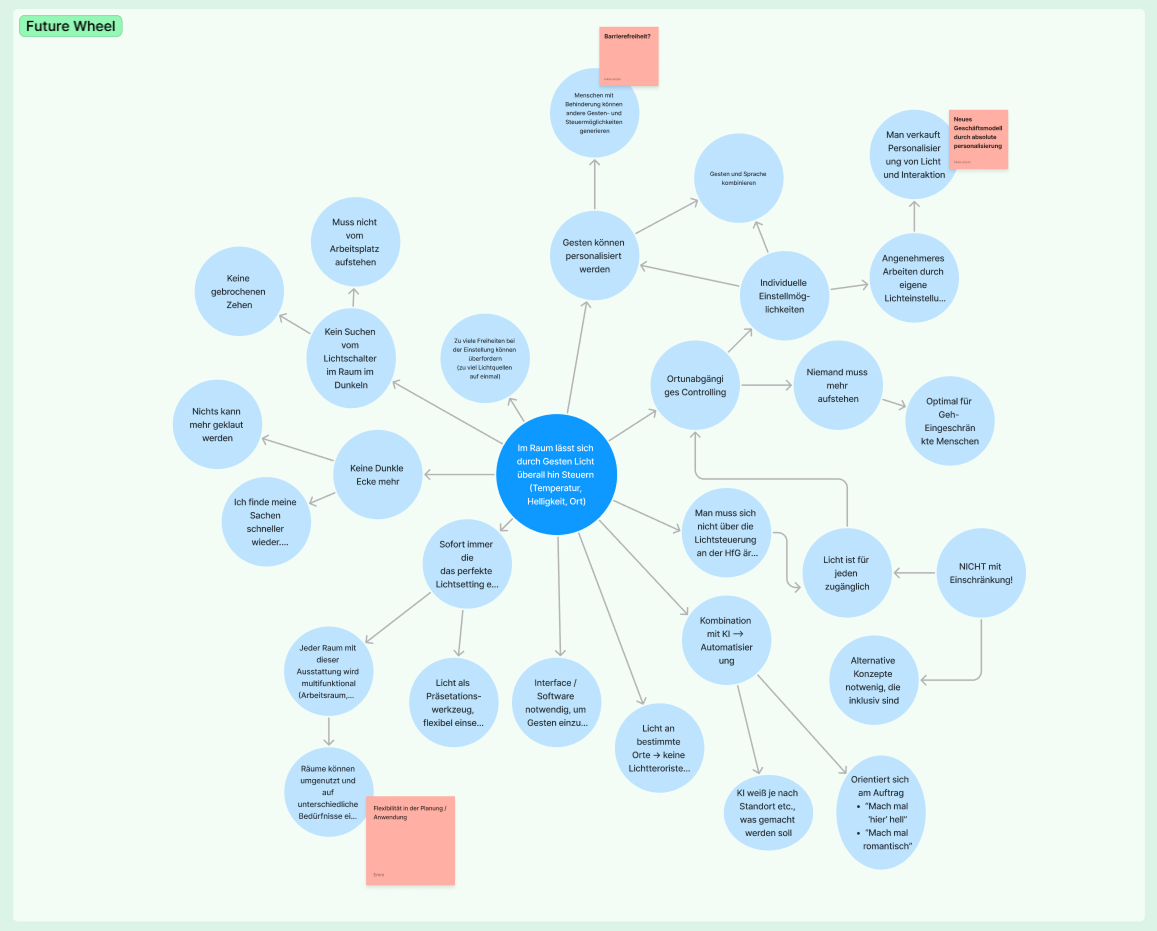
The project's foundation was a comprehensive research phase designed to understand the problem space from multiple angles. We explored how a premium brand like Erco could expand its digital footprint by analyzing current trends and conducting a competitive comparison. Key to this phase were direct insights gathered from meetings with Erco's own employees, product developers, and executives. This internal perspective was complemented by external user research and interviews, allowing us to build a holistic understanding of both the business context and the user's needs and pain points.
APPROACH
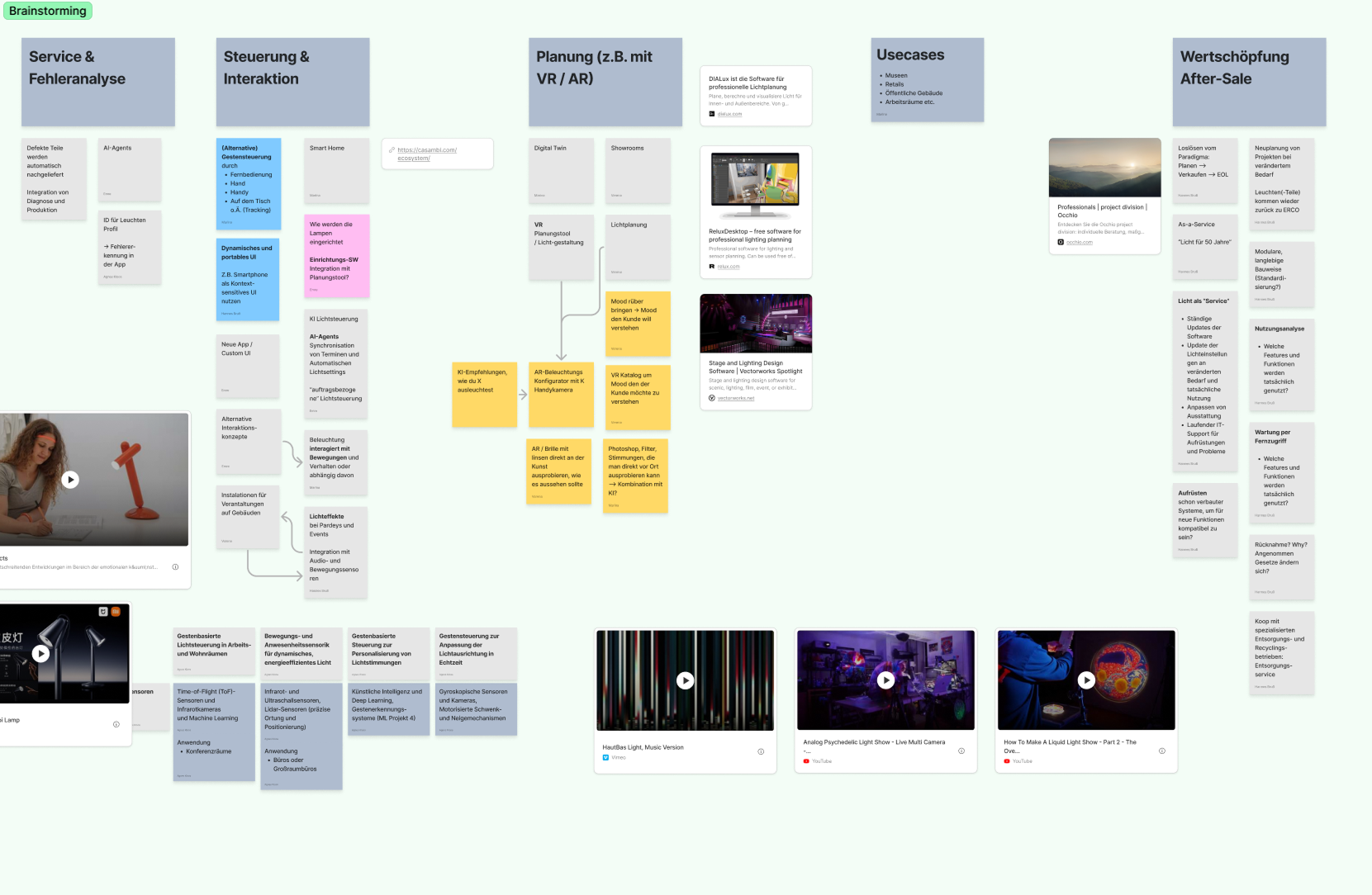
The project followed a structured design process to move from abstract challenges to a concrete solution. We began with Problem Identification through stakeholder meetings to align on the core objectives. This was followed by a Forecast / Research phase to gather all necessary data. In the Ideation phase, we used methods like Crazy 8 and Brainstorming to generate a wide range of ideas. These ideas were then structured and prioritized in the Requirements Definition phase, using tools like user stories and "How Might We" questions. Finally, we moved into UX and UI Design, where we developed user flows, wireframes, and ultimately low- and high-fidelity prototypes to bring the concept to life.
DESIGN
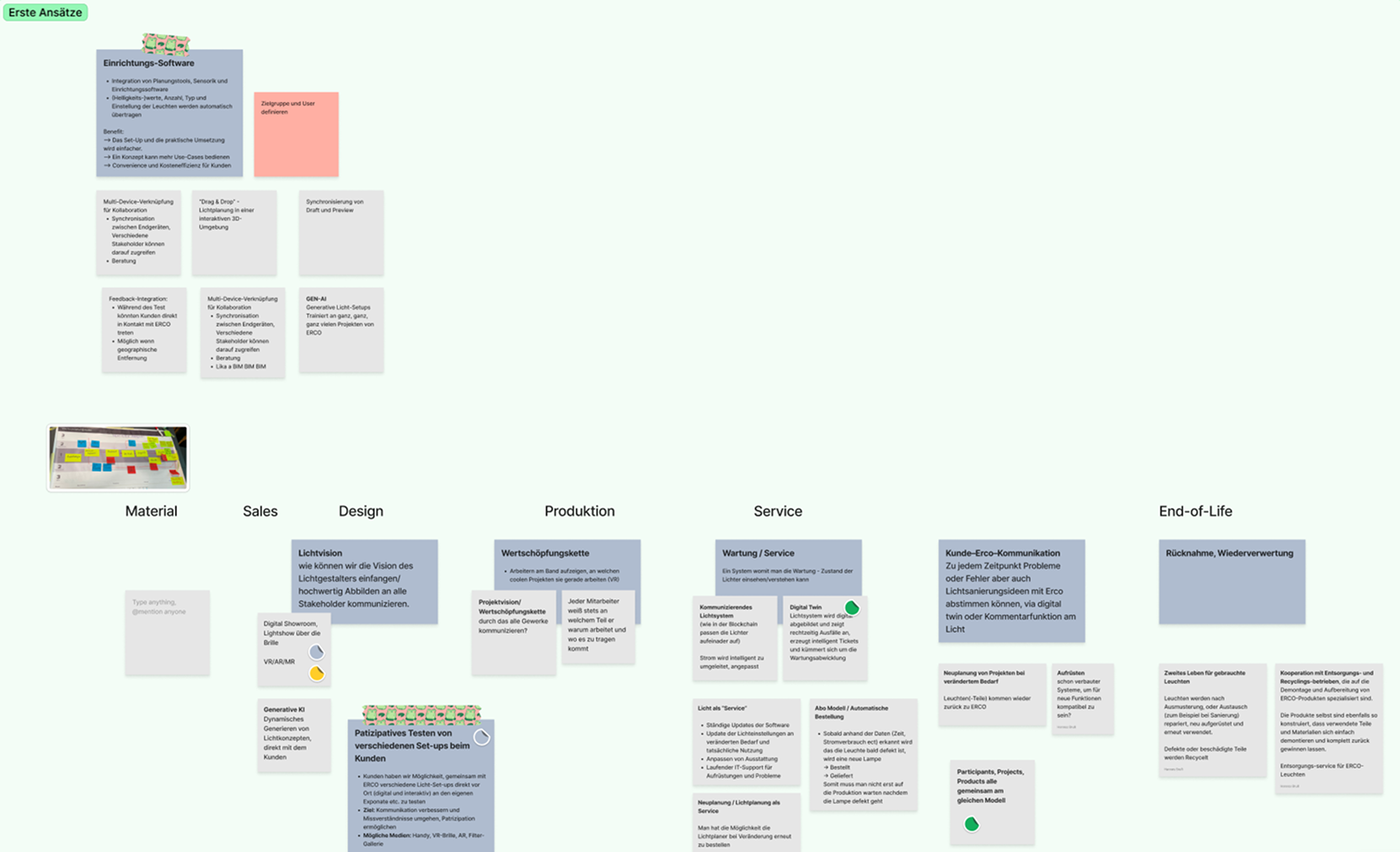
What makes this concept unique is how it translates deep user insights into an intuitive and effective digital experience. The design process focused on creating a seamless user journey, carefully mapping out each touchpoint in detailed user flows. The structural foundation was laid with wireframes, ensuring a logical and user-friendly information architecture. The final high-fidelity prototypes represent a polished and visually compelling solution that embodies Erco's brand values while being highly functional. The design serves as the tangible interface that enables the strategic goal: creating a powerful new channel for customer acquisition.
LEARNINGS
This project showed that a successful corporate innovation hinges on a tight integration of strategy and user-centric design. The key learnings are threefold:
- Deep Stakeholder Integration is Crucial: Direct collaboration with Erco's internal experts—from developers to executives—was essential to ensure our concept was not only innovative but also technically feasible and aligned with the company's strategic goals.
- A Structured Process Builds a Strong Case: Moving systematically from research and persona creation to detailed user journeys and prototypes created a clear and compelling narrative that validated our solution at every step.
- Prototyping is the Bridge to Buy-In: Translating our strategic concept into high-fidelity prototypes was the key to making the solution tangible and demonstrating its value. It was this concrete representation that ultimately impressed the stakeholders and led to the decision to pursue confidential development.